After living with my mischievous tabby Simba for over 15 years, I’ve learned one thing the hard way: cats and houseplants can be a dangerous mix.
Simba has chewed, batted, and knocked over more plants than I can count. I still remember the panic of rushing him to the vet after he got into a lily years ago. That scare taught me that if you’re a cat parent who also loves greenery, you need plants that won’t send you into emergency mode every time you see bite marks on a leaf.
The good news? You really can have a lush, beautiful home without risking your cat’s health. After years of trial and error (and plenty of chewed leaves), I’ve found the perfect lineup of non-toxic indoor plants that are genuinely safe for cats — even the ones who treat every new plant like their personal salad bar.
Here are 10 beautiful, cat-safe plants I’ve personally kept in my home with Simba:
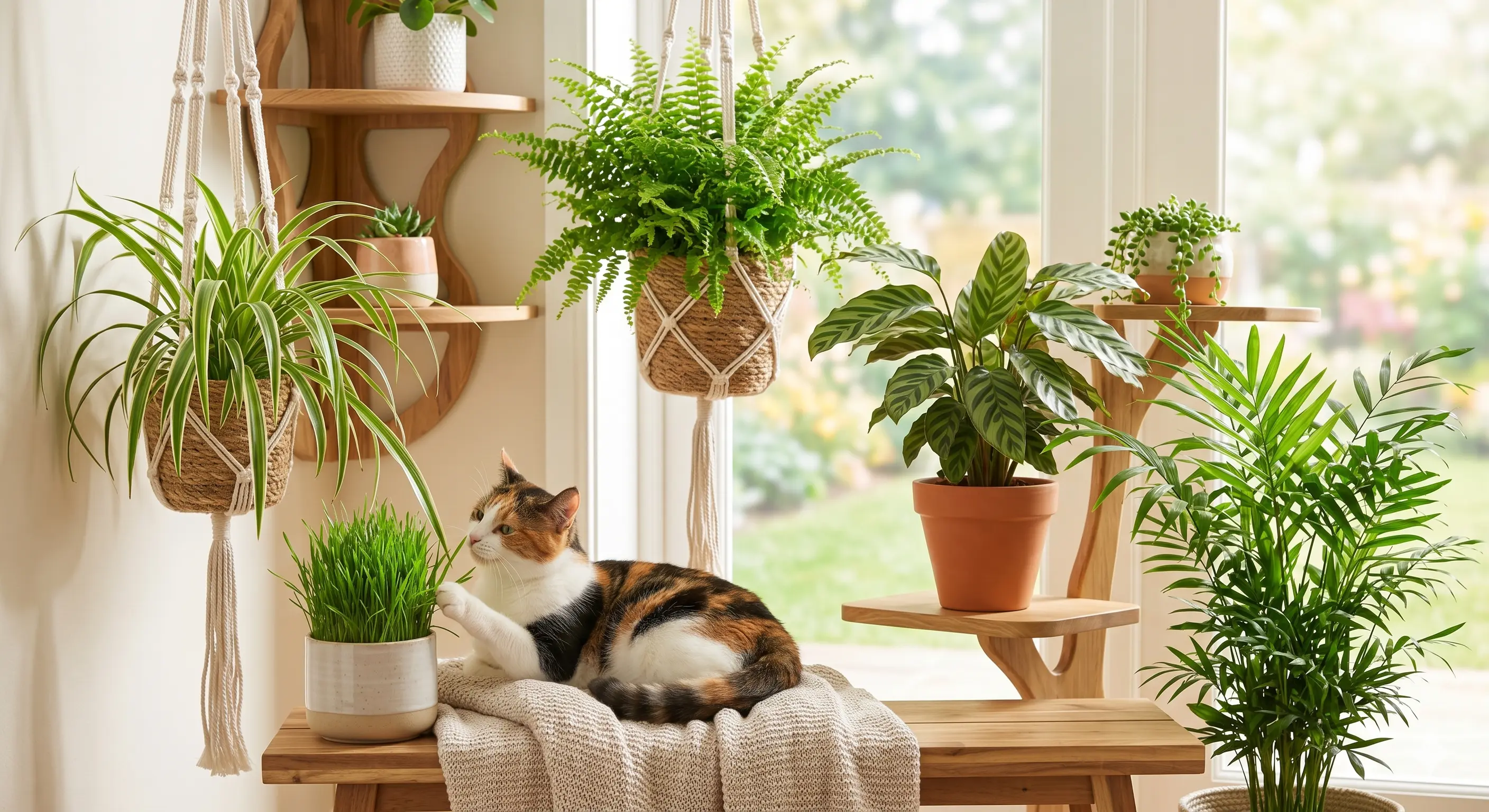
1. Spider Plant This one is a classic for a reason. Those long, arching leaves and the little “babies” dangling on the ends drive Simba crazy — in the best way. He loves batting at them, and I don’t stress when he takes a nibble. Spider plants are incredibly forgiving and thrive in bright indirect light. One of the easiest cat-safe plants you can grow.
2. Boston Fern If you want that soft, full, jungle-like look, the Boston Fern is perfect. I keep mine in a hanging basket so Simba can admire it from below without turning it into a nest. The feathery fronds look gorgeous, and it’s completely safe if he decides to taste-test. Just keep the soil moist and give it some humidity — it rewards you with lush growth.
3. Parlor Palm This plant brings such a calm, tropical vibe to the living room. It grows tall and graceful, and it doesn’t mind lower light conditions, which is great for my somewhat shady apartment. Simba has never shown much interest in it, but even if he did, it’s perfectly harmless.
4. Calathea (Zebra Plant) The way these leaves move and “pray” at night still fascinates me. The striped patterns on Calatheas are stunning — pink, white, and deep green. They prefer indirect light and moist soil. I’ve had one on my bookshelf for years, and it’s been zero drama with Simba around.
5. Peperomia These little plants come in so many fun textures — some smooth and glossy, others wrinkly or fuzzy. They stay compact, so they’re great for desks or small spaces. Simba has knocked a few leaves off before, but I never worry because they’re completely non-toxic.
6. African Violet Nothing beats having real flowers blooming indoors all year. African Violets have those soft, fuzzy leaves and pretty blooms in purple, pink, or white. I water mine from the bottom to keep the leaves dry, and they’ve been thriving safely around Simba for years.
7. Polka Dot Plant This one always makes me smile. The leaves are covered in cute pink, red, or white spots that brighten up any corner. It loves bright light to keep its colors vivid. Simba finds it interesting, but thankfully it’s 100% safe.
8. Baby’s Tears This plant looks like a soft green carpet spilling over the edges of the pot. The tiny leaves and trailing stems are irresistible to curious cats. Simba loves playing with the dangling bits, but it’s completely harmless. Just don’t let the soil dry out — it’s a thirsty little thing.
9. Echeveria If you’re into succulents but worried about toxicity, Echeveria is one of the safe ones. They form beautiful rosettes in soft greens, pinks, and blues. Mine sits in a sunny south-facing window and only gets watered when the soil is bone dry.
10. Haworthia This is my go-to when I want something that looks like an aloe but without the danger. Those white stripes and bumpy texture are really charming. It’s super tough, needs almost no water, and has been completely safe around Simba.
Tips I’ve Learned the Hard Way to Protect Both Plants and Cat
Even with safe plants, I still don’t want Simba destroying them. Here’s what actually works after 15 years:
- Grow him his own cat grass in a shallow pot. It keeps him busy and satisfied so he’s less likely to bother my other plants.
- Use hanging baskets or high shelves — out of jumping range if possible.
- A few orange peels or a light citrus spray on the soil can discourage curious paws (cats hate the smell).
- Cover the soil with smooth river rocks to stop digging and messy litter box behavior in the pots.
Final Thoughts from One Cat Parent to Another
You don’t have to choose between a green home and a safe home. With the right plants and a few smart habits, you can enjoy both your furry best friend and your indoor jungle.
Always double-check the exact species before bringing anything new home. When in doubt, leave it at the store. Your cat’s health is never worth the risk.
If you’re dealing with other common cat challenges, you might also like these guides:
- Does your cat hate still water? Here are 5 best automatic fountains they’ll actually use
- Save your sofa: A step-by-step guide to stopping indoor cats from scratching leather
- 7 natural remedies to calm your anxious cat during thunderstorms that actually work
Frequently Asked Questions
Is Aloe Vera safe for my cat? No. Aloe can cause vomiting, lethargy, and stomach upset. Stick with Haworthia if you want that spiky succulent look.
What should I do if my cat eats a poisonous plant? Call your vet or the pet poison hotline immediately. Don’t wait for symptoms. Have a photo of the plant ready so they know exactly what you’re dealing with.
Why does my cat eat plants? Sometimes it’s boredom, sometimes it’s the texture, and sometimes they’re trying to settle their stomach. Providing safe options like cat grass usually helps a lot.
Are all ferns safe for cats? No. While Boston Fern and Bird’s Nest Fern are safe, Asparagus Fern is toxic. Always check the exact name.
Does cat grass really help? In my experience with Simba — yes, it makes a big difference. Having their own tasty, safe grass often reduces interest in your decorative plants.
Are fake plants a good alternative? They prevent poisoning, but some cats will still try to chew plastic or fabric. Watch closely — swallowed pieces can cause dangerous blockages.





Leave a Comment
Reader Comments
No comments yet. Be the first to comment.