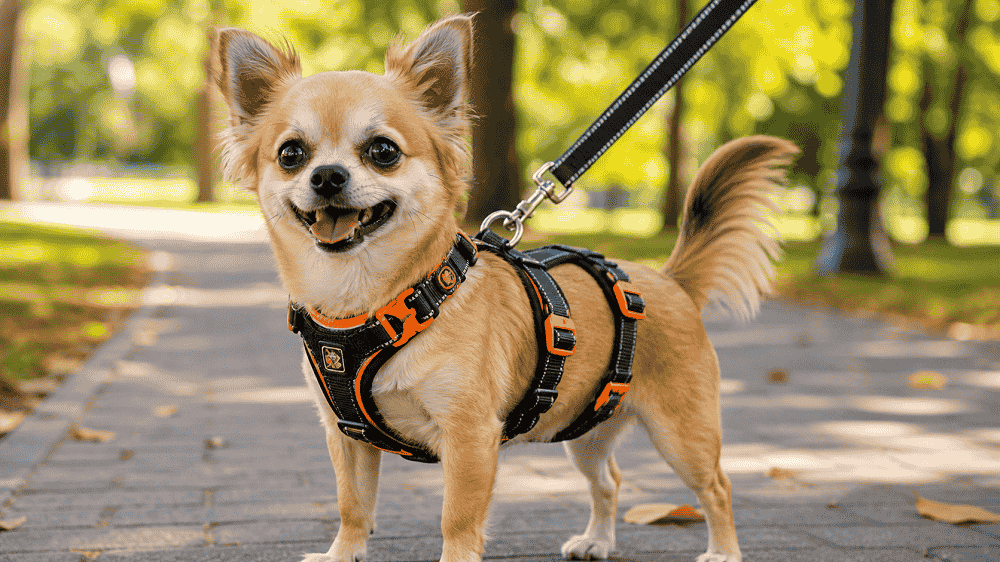
Hey there, fellow dog parents. If you’ve ever felt that sickening lurch in your stomach when your little dog slips right out of his harness in a split second, you know exactly how terrifying it is. One loud truck, one scary big dog, or just a random shadow, and suddenly you’re standing there holding an empty leash while your tiny Houdini is heading toward traffic.
I’ve been working with dogs for over 15 years now, and I’ve seen it happen way too many times. My own little guy, Tom, is a master escape artist. He’s a small mixed breed with a deep chest and a tiny waist, and for the longest time he could back out of almost anything I put on him. (My cat Simba, on the other hand, just sits on the windowsill judging us all.) After plenty of trial and error — and a few heart-stopping moments — I finally figured out what actually works for these little escape artists.
Why Small Dogs Are Such Escape Experts
Small breeds like Chihuahuas, Dachshunds, Pugs, Yorkies, and Pomeranians have those classic “big chest, tiny neck and shoulders” bodies. A regular harness slides right off when they plant their feet and back up. Add in the fact that many little dogs are extra sensitive to noises and surprises, and you’ve got the perfect storm for escapes.
A loose fit makes it even worse. I used to think “a little room for comfort” was kind, but I learned the hard way that a slightly baggy harness is the number one reason dogs slip free.
What Makes a Harness Truly Escape-Proof?
After testing dozens of options on Tom and helping hundreds of clients, here’s what I look for in the best escape proof dog harness for small dogs that back out:
Third belly strap – This is the game-changer. It sits behind the ribcage on the narrower part of the tummy so the harness physically cannot slide forward over the head.
Multiple adjustment points (4–5 or more) so you can customize the fit perfectly.
Strong, reliable buckles that don’t pop open when a panicked pup pulls backward.
Y-shaped chest design that distributes pressure without choking.
Top Styles That Actually Work for Tiny Escape Artists
1. Multi-Strap Webbing Harnesses
These look a bit like mini climbing harnesses and are my personal favorite for escape-prone dogs. The extra belly strap locks everything in place. They’re lightweight, breathable, and perfect for dogs with deep chests and slim waists like Tom. I’ve had the best success with these on chronic back-outters.
2. Special “Escape-Free” Step-In Harnesses
Not all step-ins are good — most are actually easy to escape from. But the better-designed ones tighten gently when the dog pulls back, hugging the shoulders so nothing slips over the head. These are fantastic for dogs who hate having anything pulled over their ears.
3. Long Vest-Style Harnesses
These cover more of the dog’s body like a little jacket. More fabric + better coverage = much harder for a wiggly dog to twist out of. They’re also cozy for cooler weather walks and give extra security.
How to Test Any Harness Properly (Do This at Home First!)
Never trust a new harness on the first walk. Here’s my routine:
Two-Finger Rule: You should just barely fit two fingers under every strap. More than that and it’s too loose.
Lift Test: Gently lift the handle on the back. If the whole harness lifts way up, tighten it.
Pull-Back Test: Hook the leash and gently pull toward the dog’s head like he’s backing up. If it starts sliding, adjust immediately.
I do this every single time I try something new on Tom.
Extra Tips from Someone Who’s Been There
Always do a quick strap check before every walk. Fabric stretches and adjusters can slip over time.
Harnesses beat collars for small dogs every single time. Their necks are delicate — a good escape proof harness spreads pressure across the chest.
Take the harness off indoors. Leaving it on 24/7 can cause rubbing, matting, or become a chew toy when you’re not looking.
If your dog is between sizes, go with the larger one and use all those adjustment points.
Frequently Asked Questions
Can I just use a collar instead?
I don’t recommend it for small dogs. They can damage their tracheas pulling on a collar. A proper harness is much safer.
Are step-in harnesses good for escape artists?
Only the special escape-free versions. Regular step-ins are usually one of the easiest types to back out of.
What if my dog is exactly between two sizes?
Buy the bigger size and adjust down. You can always make a harness smaller, but you can’t safely stretch one that’s too tight.
How tight is too tight?
If you can’t slide two fingers underneath comfortably, loosen it. Rubbing and breathing issues are no good.
Walking should be enjoyable, not stressful. Once you find the right escape proof dog harness for small dogs that back out, those scary moments disappear and you can both relax and enjoy your time outside.
Tom still tries his old tricks sometimes, but these days he stays securely by my side. If you’ve got a little escape artist at home, don’t settle for “good enough.” Your pup’s safety is worth the extra effort.
Have you found a harness that finally worked for your dog? Drop a comment below — I read every single one and love swapping real-world tips with fellow pet parents. Here’s to safer walks and happier adventures with our furry troublemakers! 🐾




Leave a Comment
Reader Comments
No comments yet. Be the first to comment.